As we reported previously, Mechaconda is a new title from the Brazilian publisher QUByte Interactive that aims to combine the gameplay of the old Nokia cell phone game Snake with a bullet hell arena shooter, and it’s certainly successful in that aim.
And while Mechaconda’s press release directly makes reference to Mechanconda reinventing “a classic mobile gameplay loop,” the cellphone game of Snake wasn’t actually the first example of the genre of video game that we’ve decided to refer to as “Snakelikes,” and if any future video game historians or etymologists happen to be reading this review, I’d like to claim the credit for inventing the term “snakelike” for this particular genre of game.
Indeed, the earliest example of a “Snakelike” predates the once ubiquitous cellphone game of Snake by over two decades, with the genre originating with the 1976 arcade game Blockade, as opposed to the 1998 launch of Nokia’s cell phone-based Snake.
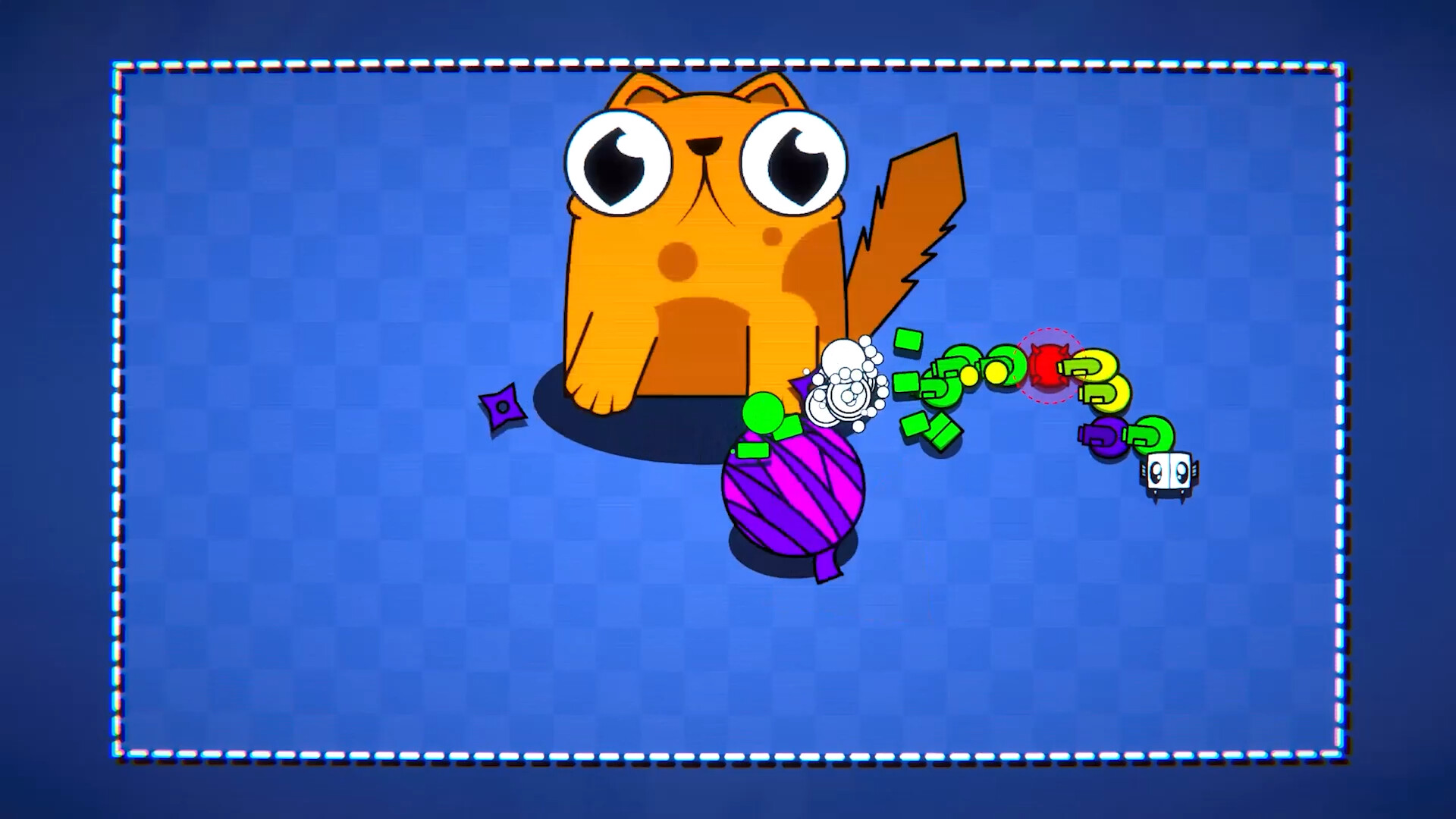
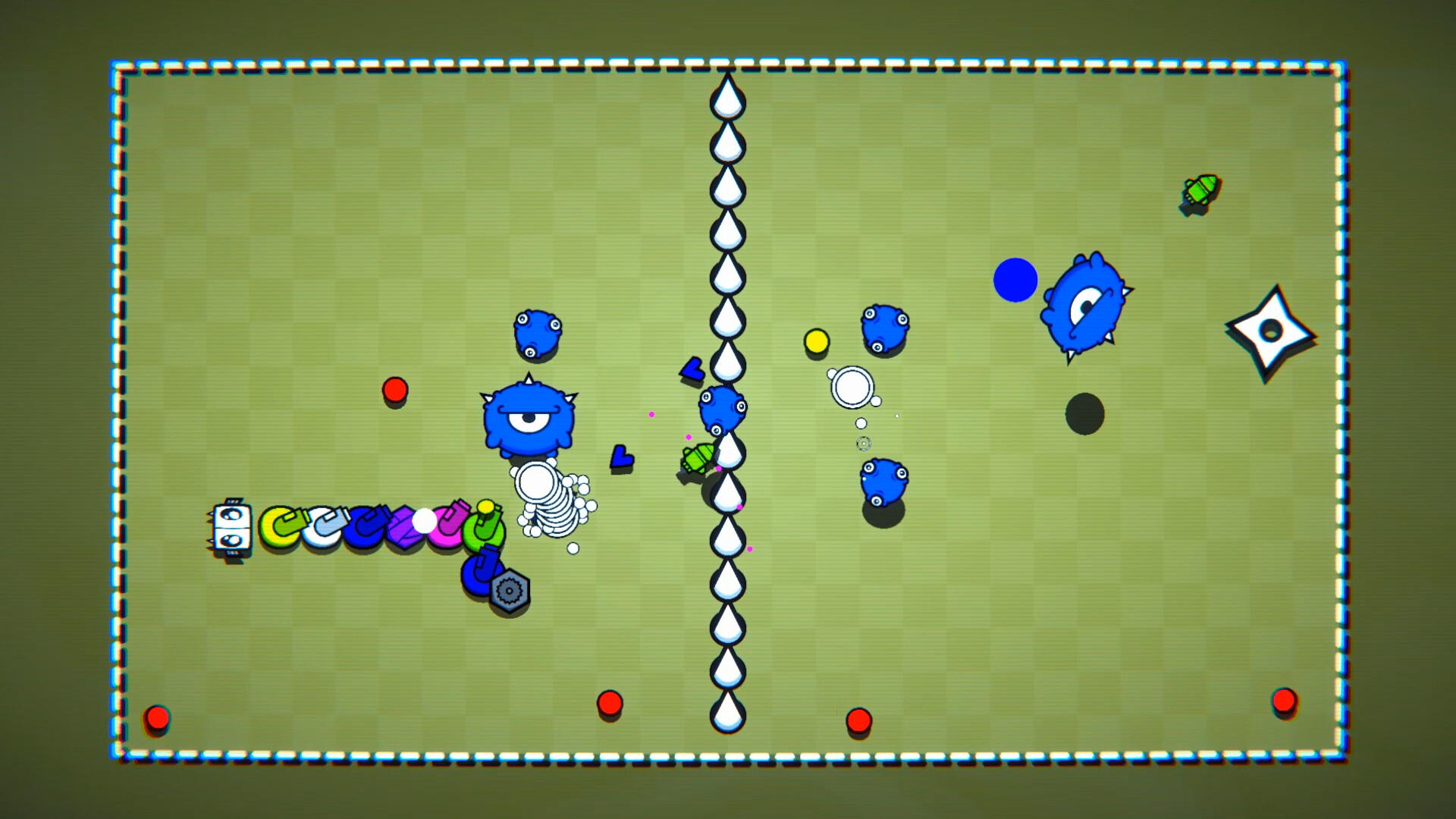
Mechaconda differs from previous “snakelike” games in a number of crucial ways: most significantly: you can shoot enemies and jump over obstacles. What’s more, rather than growing whenever it eats, the Mechaconda grows in length by collecting a trail of drones. Indeed, you begin the game droneless, and thus unarmed, until you collect your first gun drone, and throughout the game, upon clearing each screen of its enemies, you’ll be presented with a choice of other drones to join the tail of your Mechaconda, which can offer such upgrades as more bullets, a longer period of invincibility upon respawning, or death to enemies upon impact with them. So, while as in all “Snakelikes,” expanding your snake makes it more dangerous and difficult to manoeuvre, making you more likely to make contact with deadly hazards, it also powers up your snake wih improved abilities, making expanding your Mechaconda something of a double-edged sword.
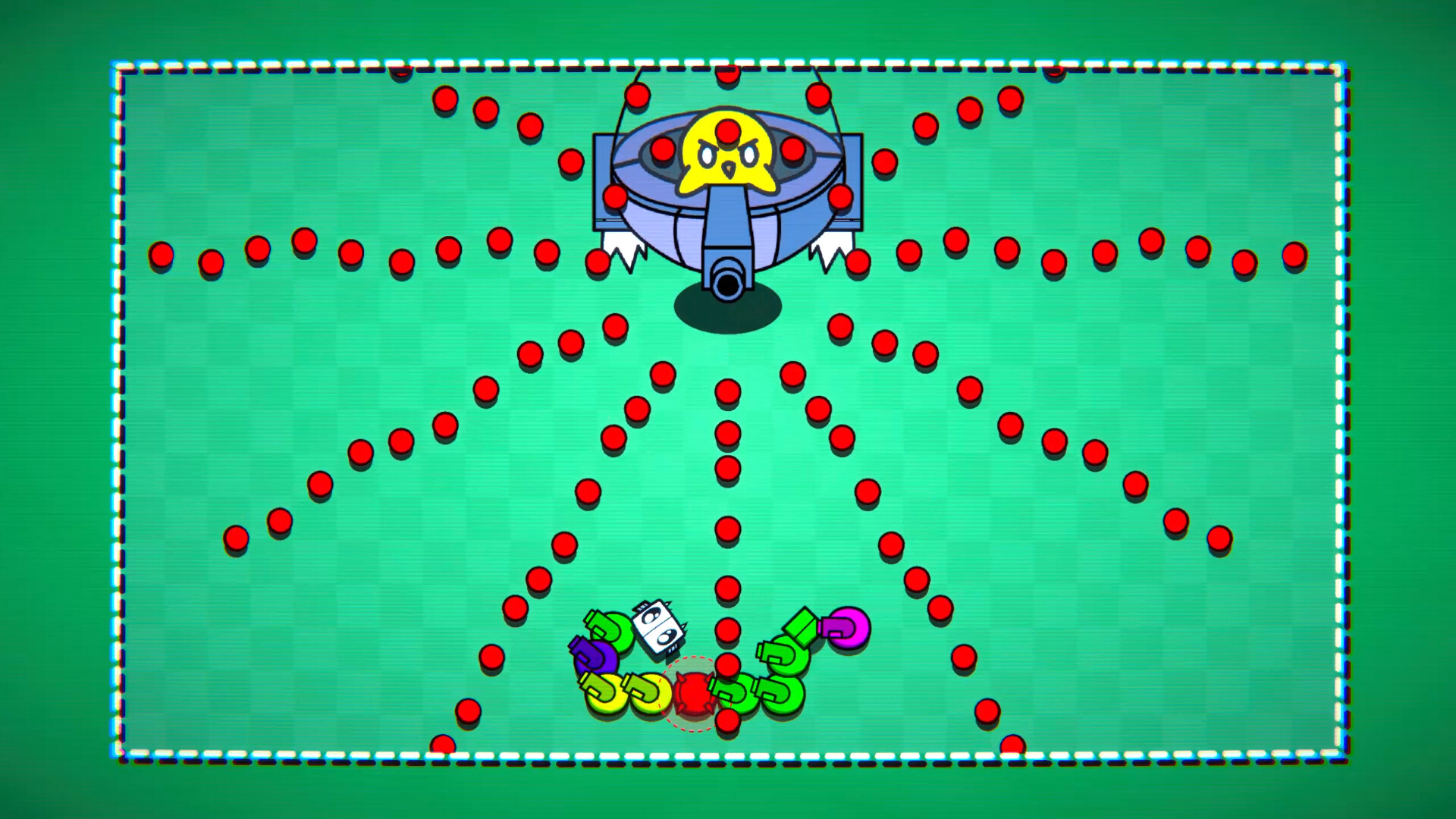
The controls in Mechaconda are simple and intuitive, with your snake constantly and automatically moving, but with its direction controllable by moving left or right, as in all “Snakelike” game, and a button to jump, and another button to shoot, with the shoot button autofiring if it’s held down. On that subject, perhaps an automatic firing option in the style of the “Survivors” genre of games could’ve been added to the game to make it a little easier for those who are less au fait with bullet hell shooters, because, while Mechaconda’s controls are easy to grasp, it still provides quite a challenge, and while the game could have appeal to the more casual gamer who may fondly remember playing Snake on their Nokia phone 20 plus years ago, they may find the rather harsh difficulty of Mechaconda a little off-putting.
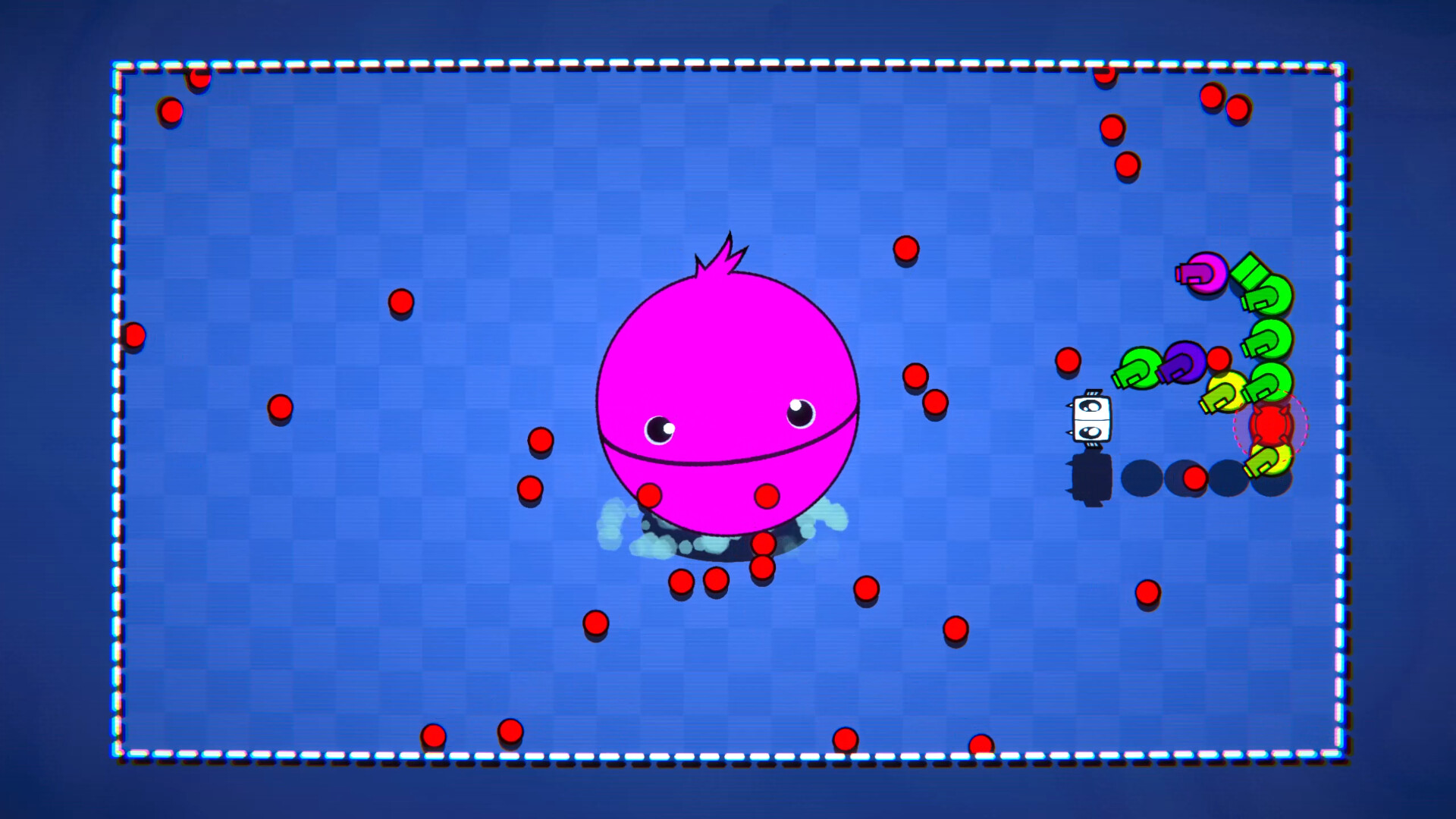
Indeed, adding shooting and jumping into the “Snakelike” mix doesoffer a unique spin on the genre, but one could perhaps also make the argument that in doing so, it rather loses the simple elegance that’s offere by more simple the standard £Snakelike” games by trying to do too much. However, on balance, Mechacoonda just about pulls it off, creating a unique experience that successfully combines two tried and tested genres, and that feels like one person’s singular vision come to life. Because that’s exactly ehat it is: the work of a solo developer, who created Mechaconda as an entry for a game jam, but the end result was so impressive that QUByte Interactive wanted to bring it to the world, growing far beyond its humble Game jam origins!
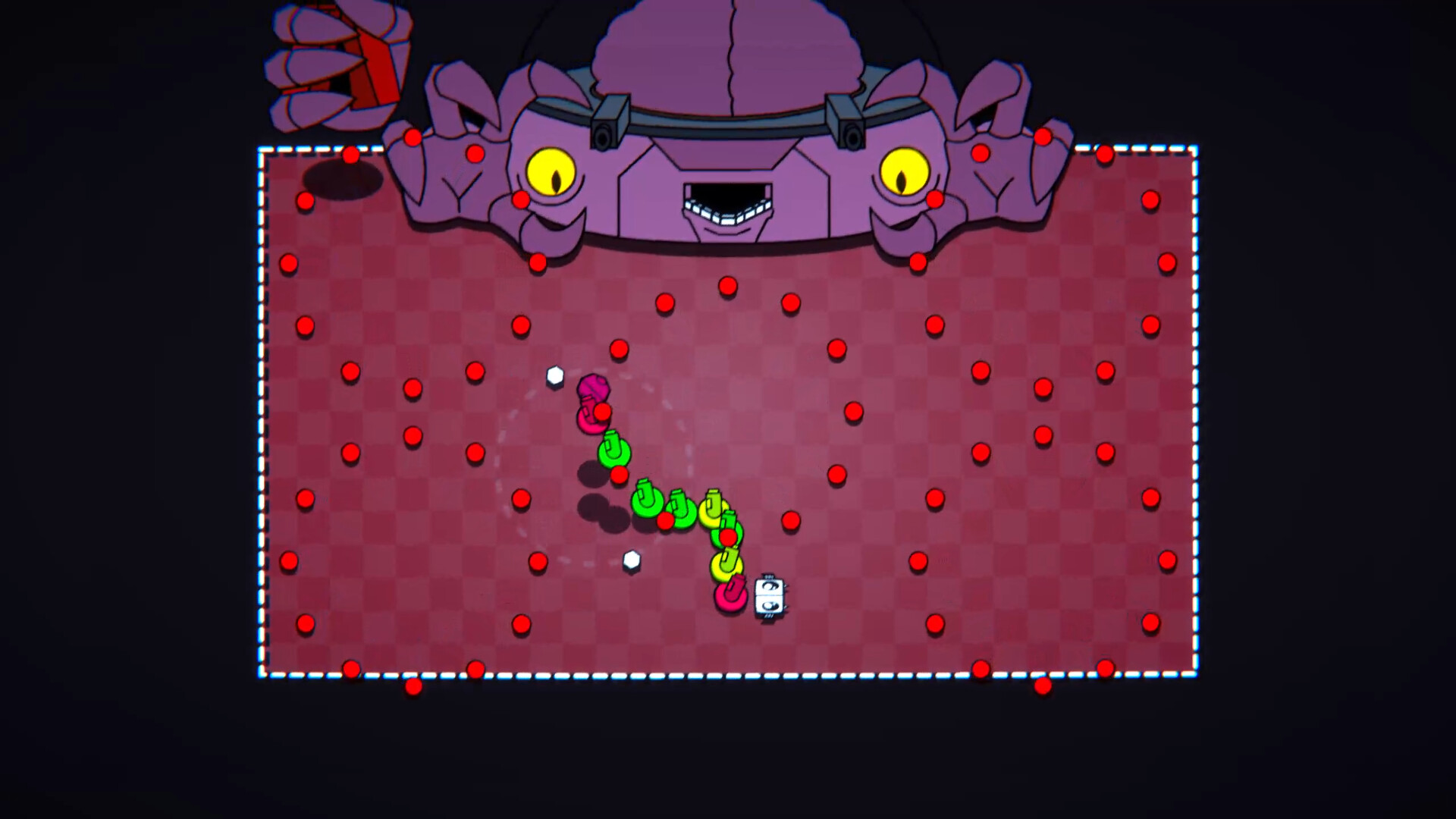
Mechaconda is also a well-presented game, with attractive cartoon-like graphics and appealing background music. And despite its somewhat punishing difficulty level, Mechaconda certainly has that “one more go” pull to keep you playing.
At its budget price of just $7.99 USD or the local equivalent, Mechaconda offers great value for money, and while you’ll probably only ever play through the campaign mode once, the addition of a roguelike mode and a boss rush mode could keep you coming back to Mechaconda for years to come, so you’ll certainly get plenty more than your money’s worth from the game!
As we stated earlier, Mechaconda has been published by the Brazilian publisher QUByte Interactive, which has been making quite the name for itself in the retrogaming scene, by unearthing forgotten gaming gems of the past in its QUByte Classics range, and it’s great to see it publish an all-new retro-influenced title from a solo developer from its home country of Brazil, which certainly isn’t a country whose games we end to see so often on such an international scale, so kudos to QUByte for championing its local talent!
Mechaconda has been developed by Nato Games, and it was published today (July 30th, 2026), by QUByte Interactive, on PC (Steam, Epic Games Store), Xbox One, Series X|S (version reviewed), PlayStation 4&5, and Nintendo Switch.