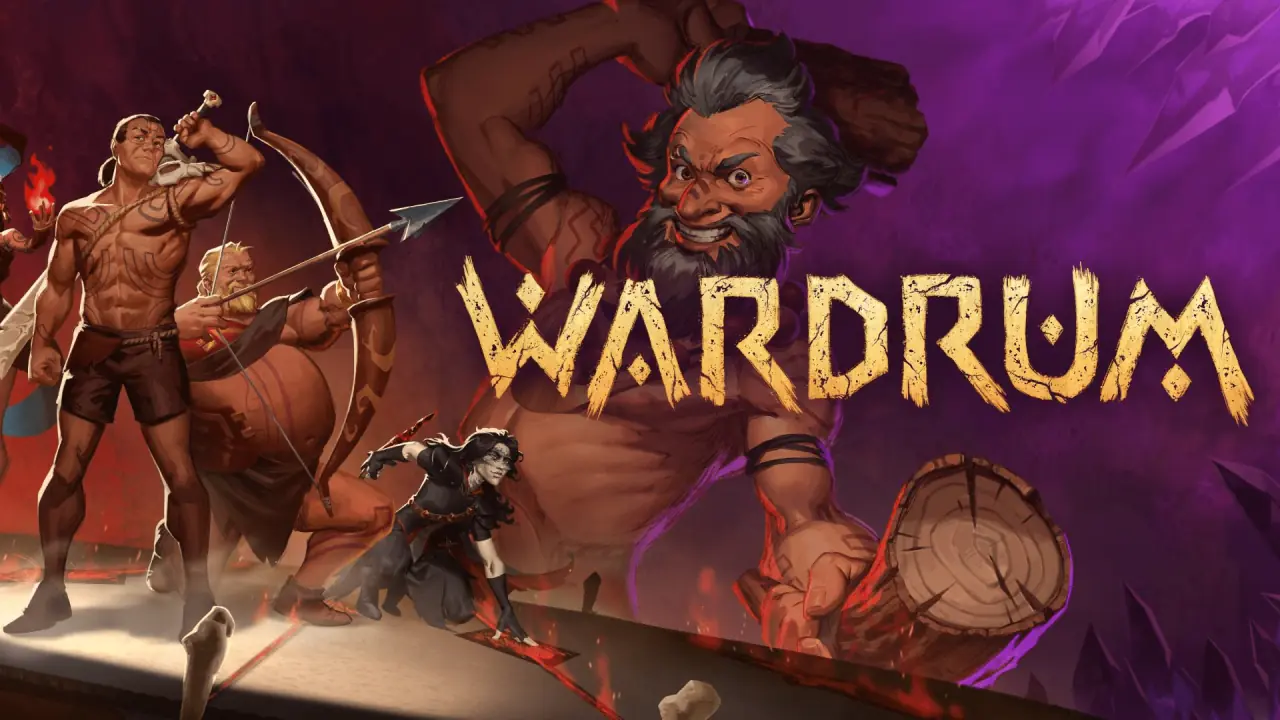
We first reported on Wardrum, a new turn-based tactical rhythm title from developer Team 17, last month. Since then, the game has been released on Steam, and we’ve played through the first few hours. First off, this game mixes traditional turn-based battles, where you command units and upgrade troop attacks, with rhythm-based skills. Anyone who played Gladius back in the day will instantly understand the gameplay loop and the unique balance between taking turns while needing to be skillful when using attacks.
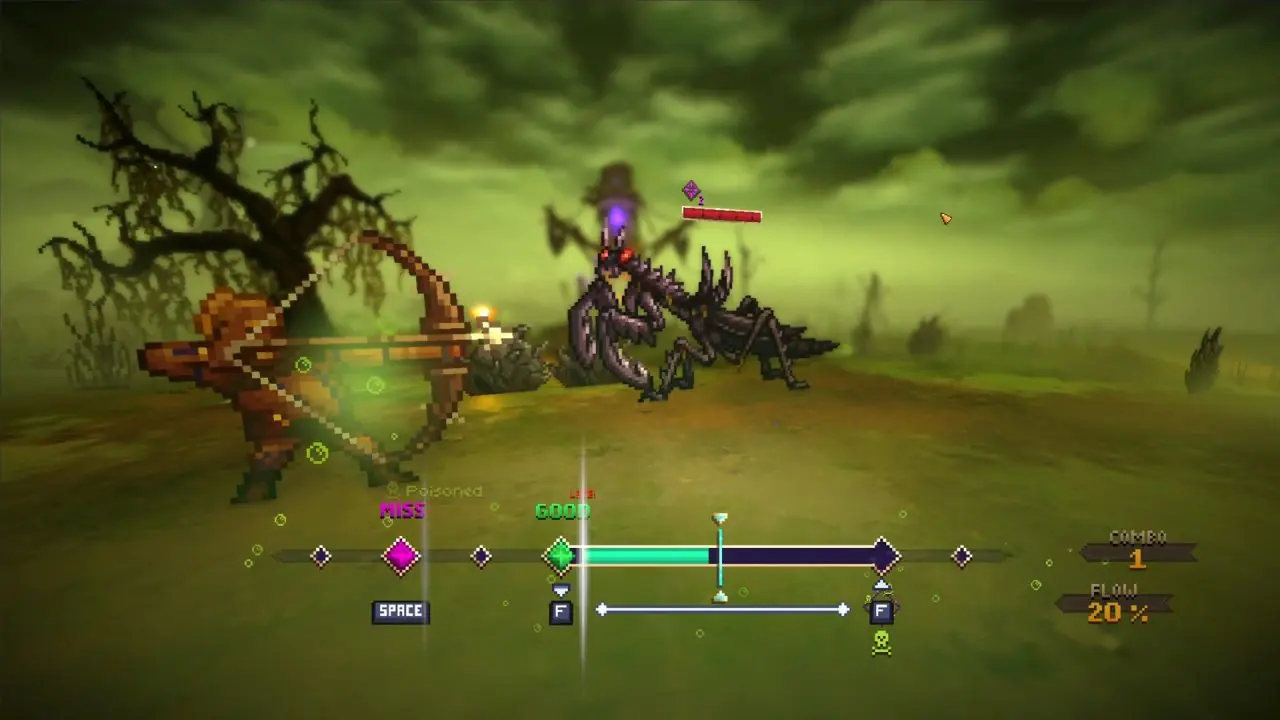
For those who didn’t get to play LucasArts‘ brilliant turn-based RPG twenty years ago, the gameplay loop in Wardrum starts with moving a troop into position, using any items you may wish to, then selecting a move to perform. These moves may be a simple melee attack, or they may be something more complex, such as a spell or prelude to a bigger attack on the next turn. Once you select which move to perform, the game breaks out of the turn-based nature and requires you to perform what is essentially a quick time event with multiple button presses, much like a combo in a fighting game.
To win each battle, you must have at least one surviving unit, and all the enemies must be destroyed. The better your team does, the more experience and items can be awarded. Although there isn’t much depth to the unit upgrades, you do occasionally get to choose between different moves to add to the character’s arsenal, as well as add a couple of trinkets that add buffs to the characters. Wardrum is more about getting out there, taking on gangs of enemies, and playing through the very light story mode than it is about deep squad builds or minute tactical changes to troops.
In fact, the most important aspect in Wardrum is nailing the combos and maxing out the damage you do, rather than worrying about stats and equipment. We found that simply using each unit’s most basic moves to a high standard of combo performance would win most battles, no matter the toughness of the enemies. Of course, though, you don’t just want to be performing the same move over and over; the game loop would wear thin quickly. There are lots of different moves to perform for each troop type, and some start to get quite complex as the character levels up.
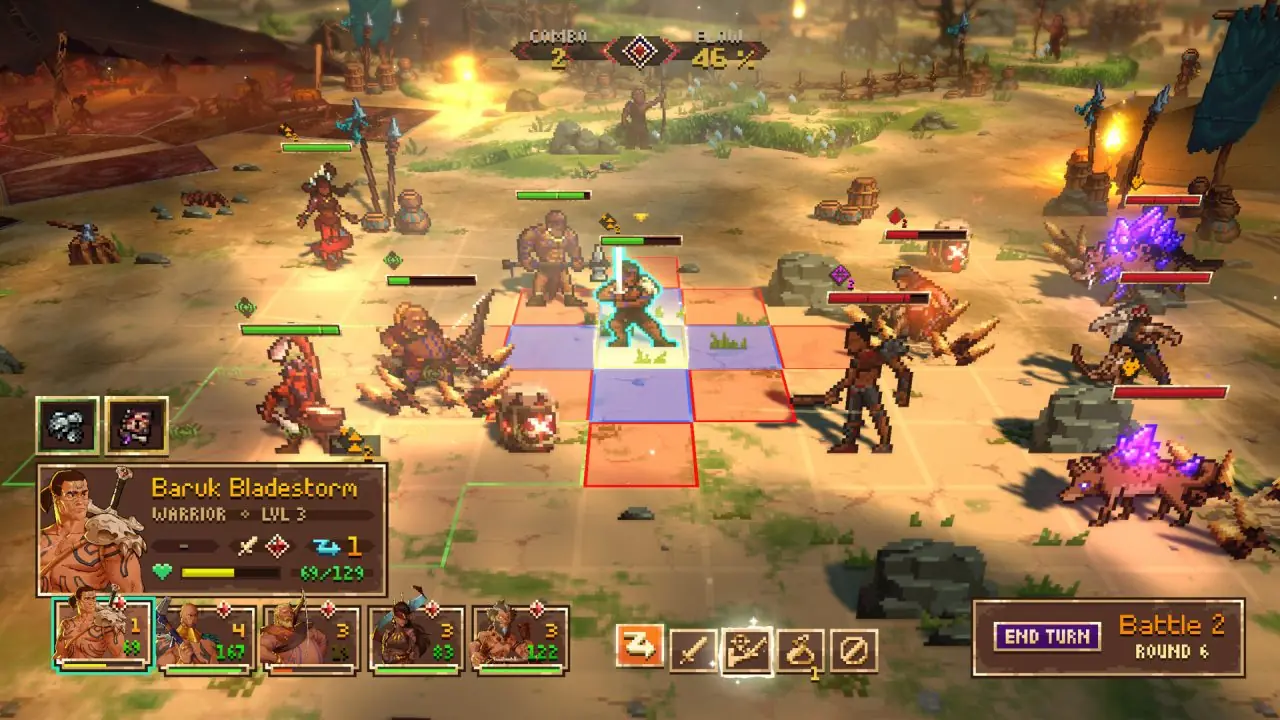
The presentation in Wardrum is as interesting as it is unique. Most of the time, you’ll be looking at pixel art characters and scenery laid out on a 3D map. This does work okay, except at times when there is a lot of clutter concentrated in one area, which sometimes makes seeing exactly the area of effect of spells or attacks difficult. This is further exaggerated by the camera, which only goes up and down a little and cannot spin around to get a better view of a particular situation. That said, the tiles on the battle maps usually give a good indication of what you can and can’t do; it just takes a little getting used to.
Overall, Wardrum is a fun mix of action and strategy with a light story and some interesting mechanics. The character level-up system is a little shallow, but that actually helps you focus on how to win. Fans of the genre may not find this heavy enough in the strategy department, while newcomers to the genre may find the combo moves hard to master. This is a tricky one to know who to recommend to, but it’s a well-made game nonetheless, and the tribal aesthetics and drum beats are excellent. What cannot be denied is that this type of game, a mix of turn-based and action, needs to see some more love, as it works so well.